Ranger Reverse Proxy
31st Aug, 2025•backendcompleted
#reverse-proxy#nodejs#typescript#backend#load-balancing#cluster#yaml#zod
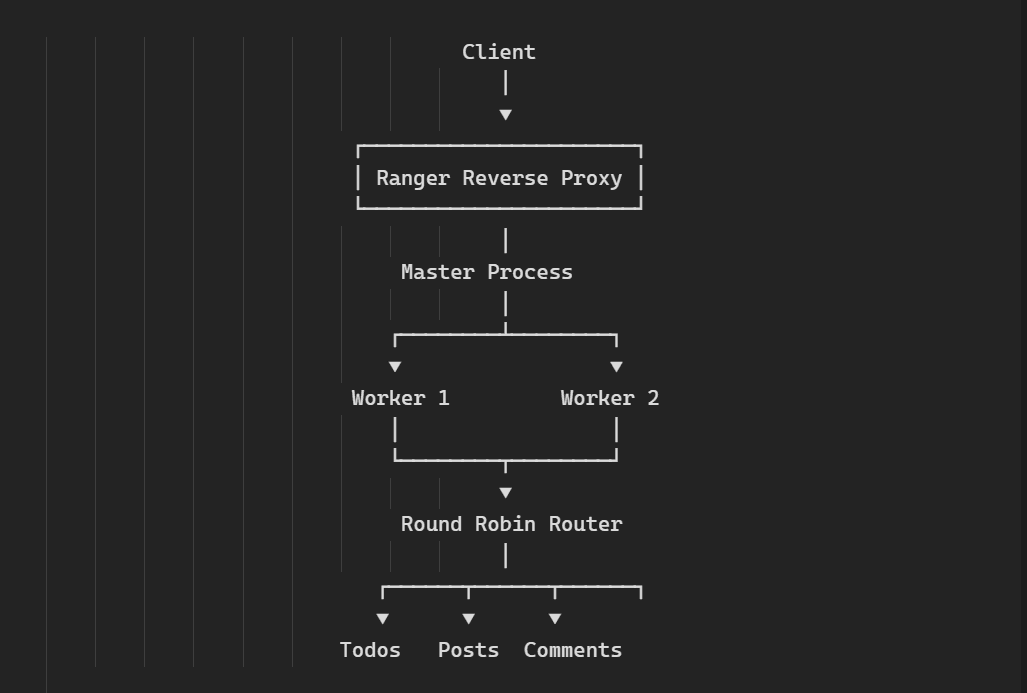
A lightweight reverse proxy built with Node.js and TypeScript featuring configurable routing, worker clustering, round-robin load balancing, YAML-based configuration, and schema validation for scalable backend request forwarding.
Media
Overview
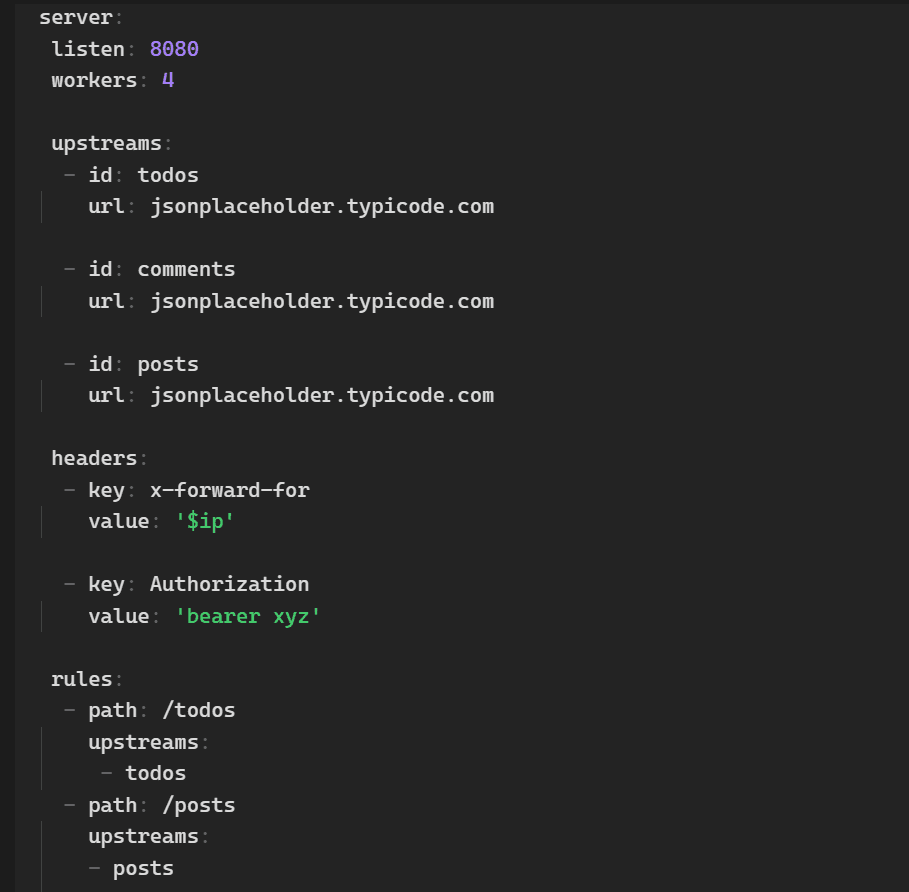
Ranger Reverse Proxy is a lightweight, configurable reverse proxy server built with Node.js and TypeScript. It forwards incoming HTTP requests to backend services based on configurable routing rules while supporting worker clustering for improved scalability and concurrent request handling.
The project focuses on building core reverse proxy functionality from scratch instead of relying on existing proxy servers, providing a deeper understanding of backend networking and distributed request processing.
Motivation
Modern applications often place reverse proxies in front of backend services to improve scalability, routing, and request management.
This project explores how a reverse proxy works internally by implementing routing, request forwarding, worker management, and configuration handling using Node.js native APIs.
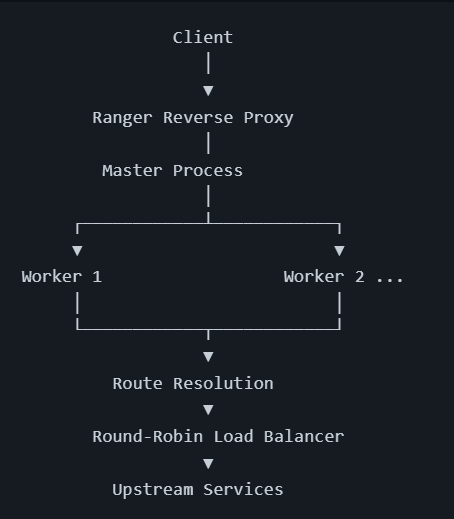
Architecture
                Client
                   │
                   ▼
        Ranger Reverse Proxy
                   │
         Master Process
                   │
      ┌────────────┴────────────┐
      ▼                         ▼
 Worker 1                  Worker 2 ...
      │                         │
      └────────────┬────────────┘
                   ▼
          Route Resolution
                   ▼
        Round-Robin Load Balancer
                   ▼
          Upstream Services